Classroom Keepsakes · buyer guide
Class gifts versus school-wide teacher recognition
For a worldwide Classroom Keepsakes teacher-gift order, separate a class thank-you from school-wide recognition before counting pieces. A class gift speaks for its participating group; a school award speaks for the authorized institution. Combining payment or delivery does not automatically combine those voices, recipient rules or approval responsibilities.
Reviewed 2026-09-05 · AI-assisted editorial review. General buying guidance; illustrative scenarios are not customer case studies. Images are AI-generated concepts.
Who does a class gift speak for?
A class gift should identify the group that actually authorized the message, such as the participating families or an approved class cohort. Avoid claiming that every student or parent contributed when that has not been established. The giver line can be warm without overstating participation or implying institutional endorsement.
Choose that line before collecting individual messages. A parent organizer may be able to coordinate a voluntary group gift but still need the school’s guidance on names, collection and presentation. Keep the contribution record separate from the inscription list. A family’s payment amount should not determine the size of a student’s name on a shared thank-you.
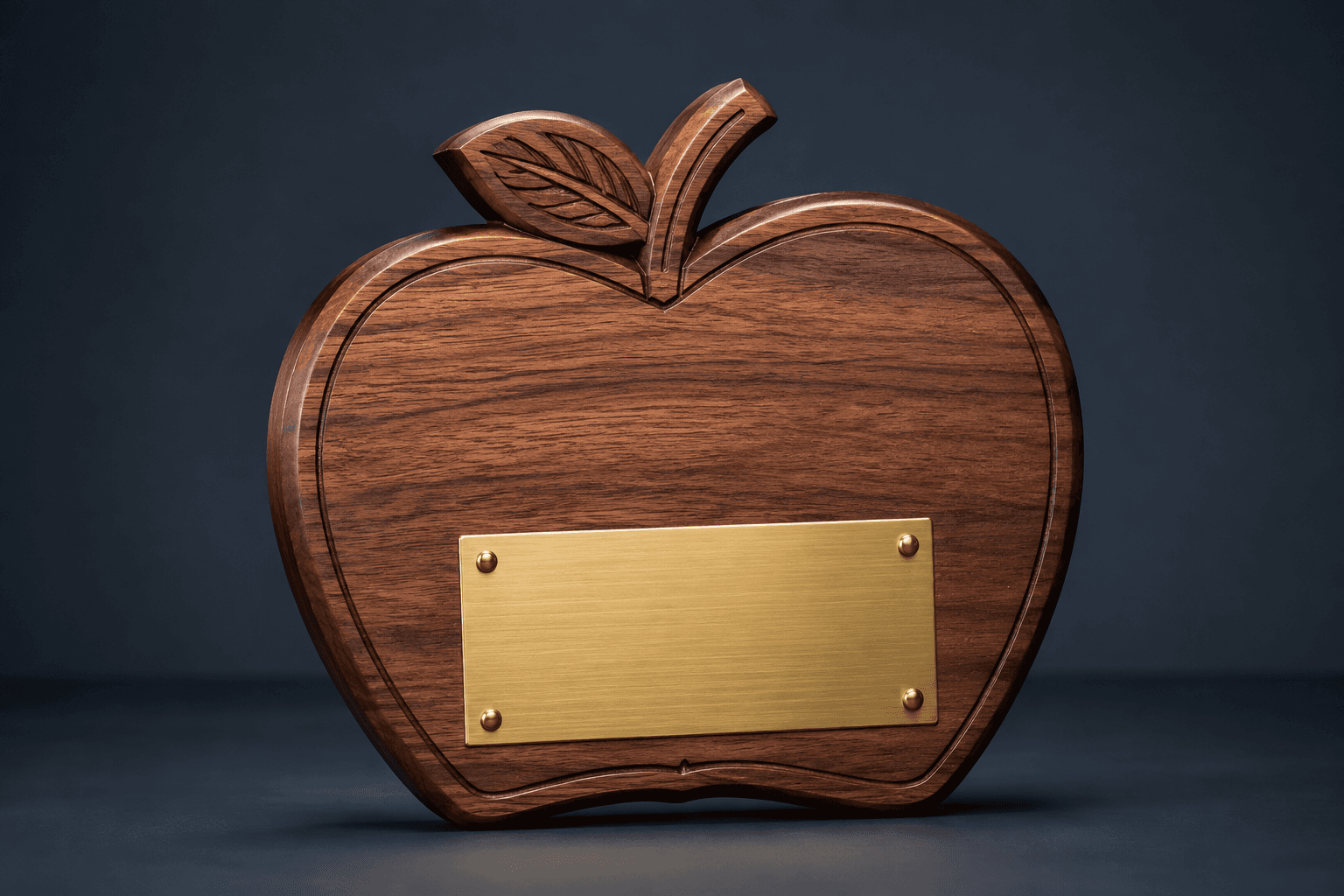

Who authorizes school-wide teacher recognition?
School-wide recognition needs an approved recipient list, recognition purpose and institutional sign-off. A committee collecting suggestions should distinguish nominations from selected recipients. The order file should contain the final authorized result, while the school retains responsibility for the process used to reach that result and the language describing it.
Do not promote a class favorite into a school award through a stronger engraving title. Phrases such as teacher of the year carry a different claim from thank you from our class. If the school has not made that designation, use an accurate appreciation message. A formal-looking object does not create authority for the title.
Can one teacher receive both kinds of gift?
One teacher can receive a class thank-you and a separate school-recognition piece when both groups approve that plan. These are two gifts with different givers and purposes, even when the recipient name is identical. Deduplicating names across the whole order could remove a deliberately separate gesture.
Use a piece reference that combines recipient and gift program so the two items remain distinguishable during proofing and packing. If organizers prefer one combined object, obtain approval for the merged message and explain how each giver will be represented. Do not combine the pieces merely because the procurement spreadsheet flags a repeated name.

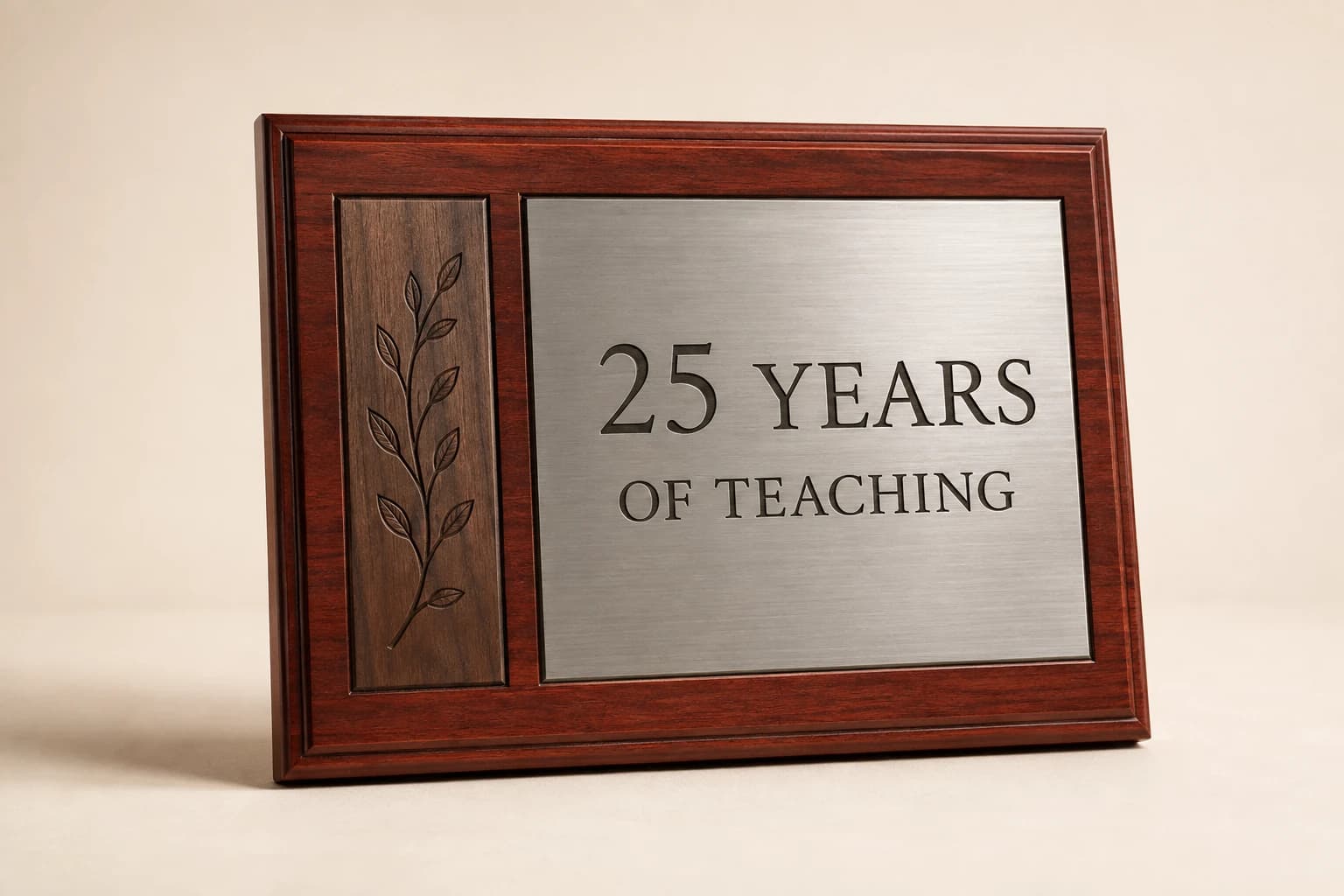
What wording fits a class thank-you?
A class thank-you can name the teacher, the participating class and a specific approved sentiment without making a ranking claim. Choose language the group is comfortable owning. A short description of the shared experience is usually easier to approve than a borrowed quotation attributed to someone the group has not checked.
For example, an illustrative class message might thank a teacher for encouraging questions during the school year. That sentence expresses the group’s gratitude rather than claiming measured student outcomes. Have the class representative confirm that the wording reflects the intended group. Inspiration from a wording page still requires approval of the actual inscription.
DIY Awards publishes teacher appreciation wording examples.
Count class gifts and school recognition pieces
The fictional program has eighteen class gifts and four separate school-recognition pieces. Enter eighteen main units, one piece each, four extras and no spares to check twenty-two objects. The worksheet keeps the gift owner and approving group visible because a shared order does not give every organizer authority over every inscription.
Method: Multiply units by pieces per unit, then add separately entered categories and explicitly chosen spares. No eligibility or spare allowance is inferred.
Build your plan
Set spares yourself. This calculates the quantities you enter; it does not assume a recommended buffer.
Use the article’s example files
Sample rows are fictional planning examples. Replace them with authorized information and retain the approval references privately; this file is not a production release.
How should shared staff and specialist teachers be handled?
Ask the program owner to define whether specialist, visiting, part-time and shared teachers are included before collecting quantities. Class timetables can overlap, and a teacher supporting several classes may appear in several requests. The right quantity depends on the approved gift relationship, not simply the number of timetable entries.
A school-wide equal-recognition program may choose one item per included teacher, while independent classes may each choose their own gift. Neither convention should be inferred by the supplier. List the selected rule and any exceptions in the worksheet. Resolve an uncertain recipient before engraving instead of using a spare budget to make an unofficial inclusion decision.

How do you compare the costs fairly?
Compare a per-class gift plan with a per-recipient school plan using their actual piece counts, personalization and packaging requirements. One shared class plaque and several individual school pieces perform different jobs. Ask for the full written totals, including any artwork preparation and delivery arrangements, before judging which scope fits the available funds.
Keep voluntary contributions and institutional purchasing approvals in their own records. If funds are insufficient, discuss changes to object size, inscription scope or presentation packaging with the authorized group. Quietly reducing the recipient list changes the recognition program. A purchase decision should not be disguised as an administrative correction to the names file.
Should the gifts share one visual design?
Related designs can make a combined presentation feel coherent, but the giver and purpose should remain clear on each piece. A class message and an institutional award can share a visual family while using different title hierarchy. Confirm the longest approved class name and formal recognition title in their respective proofs.
Do not force every inscription into an identical line count if that weakens meaning. A brief class thank-you may need more room for signatures; a school award may need an official title and period. Compare the available inscription areas for those jobs. The selected concept photograph should guide appearance discussions, not substitute for a completed layout.
Who approves a combined purchase order?
Name one purchasing coordinator while preserving separate content approvers for each gift program. The coordinator can reconcile quantities, quote scope and delivery without rewriting the school’s award title or a class’s approved message. A combined order should make responsibility easier to trace rather than bury different approvals inside one informal email chain.
Store the piece reference, final text revision and approving role together. If one class changes its message, identify the affected pieces and ask whether that revision changes preparation or timing. Other approved items need not become uncertain merely because one subgroup is still discussing wording. Obtain the supplier’s written plan for any separate release.
How should the presentation and handoff work?
Pack each gift by its presentation group and identify the intended owner after the ceremony. A class plaque may go home with the teacher, while an institutional display may stay at school. State that decision before ordering stands, wall display arrangements or duplicate keepsakes that could otherwise be assumed.
If the same teacher receives two pieces, schedule their handoff so neither appears to be a packing mistake. Keep absent-recipient gifts assigned to their owners and identify the school-approved collection contact. The receiving check should reconcile both gift-program subtotals, not just confirm that a carton contains the overall number of objects.
Illustrative example: How does a combined class and school order add up?
In a fictional program, eighteen classes each approve one teacher gift and the school separately approves four recognition pieces. Two of the school recipients also receive class gifts. The purchase still contains twenty-two objects because the approved programs give separate pieces, even though some recipient names occur twice.
The quantity calculation is eighteen times one, plus four, plus zero spares: twenty-two. The class subtotal remains eighteen and the school subtotal remains four. The worksheet records each program’s giver line and approval owner. It does not contain contribution amounts or assume that every student signed the class message.
If the two overlapping recipients are later approved to receive one combined object each, the coordinator would remove two physical pieces, producing twenty objects. That is a new recognition design requiring revised wording and approval. It is not an automatic name-cleaning operation. The original example stays at twenty-two until that change is authorized.
Which teacher-gift structure matches the giver?
Choose the structure according to who is making the gesture and what the teacher should receive. Independent class gifts, institutional recognition and an approved combined piece have different approval paths. A single purchase order can include all three, provided each object keeps a clear giver, purpose and owner.
| Option | Useful when | Decision to resolve |
|---|---|---|
| Class gift | A participating class wants its own thank-you | Approve the group voice and teacher recipient |
| School recognition | The institution has an authorized program | Confirm official title and recipient rule |
| Combined piece | Both groups want one shared object | Approve the merged giver line and physical reduction |
What should you know before ordering?
Resolve money, authority and overlapping recipients before finalizing a shared teacher-gift order. These questions concern the relationship between class appreciation and school recognition, where one name can legitimately represent several gifts. Give Classroom Keepsakes the approved physical scope and text; keep contribution discussions and institutional selection records with the responsible organizers.
What changes the cost of class gifts versus school-wide recognition?
The main cost differences are the number of physical pieces, inscription variety, artwork preparation, packaging and delivery scope. Ask Classroom Keepsakes for written totals for each approved gift structure. A shared class plaque and individual school awards are different purchases, so compare their complete purposes as well as their prices.
Can a parent organizer call a gift teacher of the year?
Use that title only when the responsible institution has authorized that recognition. A class organizer can choose an accurate class appreciation message without implying a school-wide selection. Confirm the exact title before production; the supplier should not decide whether a teacher has earned an official institutional designation.
Should duplicate teacher names be removed?
Remove duplicate rows only after checking the gift program attached to each item. One teacher may intentionally receive a class gift and a separate school award. If both organizers want one combined piece, approve its wording and revised quantity first rather than allowing spreadsheet deduplication to change the gesture.
Must every family contribute to be included in the message?
Ask the school and organizing group to approve how participation is represented. Do not infer inscription rights from payment amounts or publish contribution details on the gift. An accurate collective giver line can avoid implying that everyone paid while still expressing the approved class or participating group’s gratitude.
What if one class is late approving its message?
Identify the affected class pieces and ask for a written timing plan. The coordinator can track that subgroup separately without changing already approved school-recognition text. Do not assume partial release, later additions or a combined delivery is available until the actual order scope and schedule have been confirmed.
Sources and scope
The sources below support the cited technical details. The ordering workflows are editorial recommendations. Your project specification, price and schedule are established in the written quote and approved proof.
- DIY Awards: Teacher Appreciation Wording Ideas · checked 2026-09-05
Which buying guide should you read next?
All buying guidesUse retirement text for an approved career transition and annual appreciation for a defined current occasion, with verified service dates and a giver who can authorize the message.
Keep recipient approval, school identity and delivery ownership attached to each gift so a combined purchase can reach several schools without creating duplicate recipients or mismatched messages.